
Zona MAco
Antonela Aiassa, Luis Renteria, Nikolay Morgunov
4-8 February 2026
This proposal by Sorondo Projects for Zona Maco 2026 brings together three artists whose work revolves around process, material, and the subtle idea of imprint. Nikolay Morgunov (Russia), Antonela Aiassa (Argentina), and Luis Renteria (Mexico) come from different backgrounds and use different media, but they share an interest in transformation rather than fixed results, in intuition more than strict planning, and in mark‑making as a quiet way of stating that something, or someone, was here. Their works do not try to impress through spectacle. Instead, they invite us to look closely at how time, gesture, and matter interact, leaving behind traces that feel very close to life itself.
All three artists live and work in Barcelona. The dialogue between them has grown not from a shared “style”, but from working side by side, understanding that process is something lived, something that takes time. Their presence in this booth continues Sorondo Projects’ focus on material‑based practices that touch on identity and change in indirect, sensitive ways. This is not an exhibition of big statements. It is more about what remains when things are not said directly. Here, works do not speak through clear images or narratives, but through surfaces, rhythms, and residues.
Morgunov's paintings are constructed as areas of conflict between interruption and order. He starts with strict, almost architectural grids and then introduces free, gestural marks, often using charcoal or other basic, earthy materials. These gestures are not simply decorative. Within an organization that seeks to maintain control, they function as little acts of resistance. Like water or glass, layers of resin provide a smooth, reflective skin that simultaneously shields and warps the material beneath. What matters to Morgunov is not finishing, but rather keeping movement alive. Each painting feels like the remains of a system that has been questioned; a structure that is still holding, but showing its doubts. The imprint here is a record of choices, hesitations, and changes of direction.
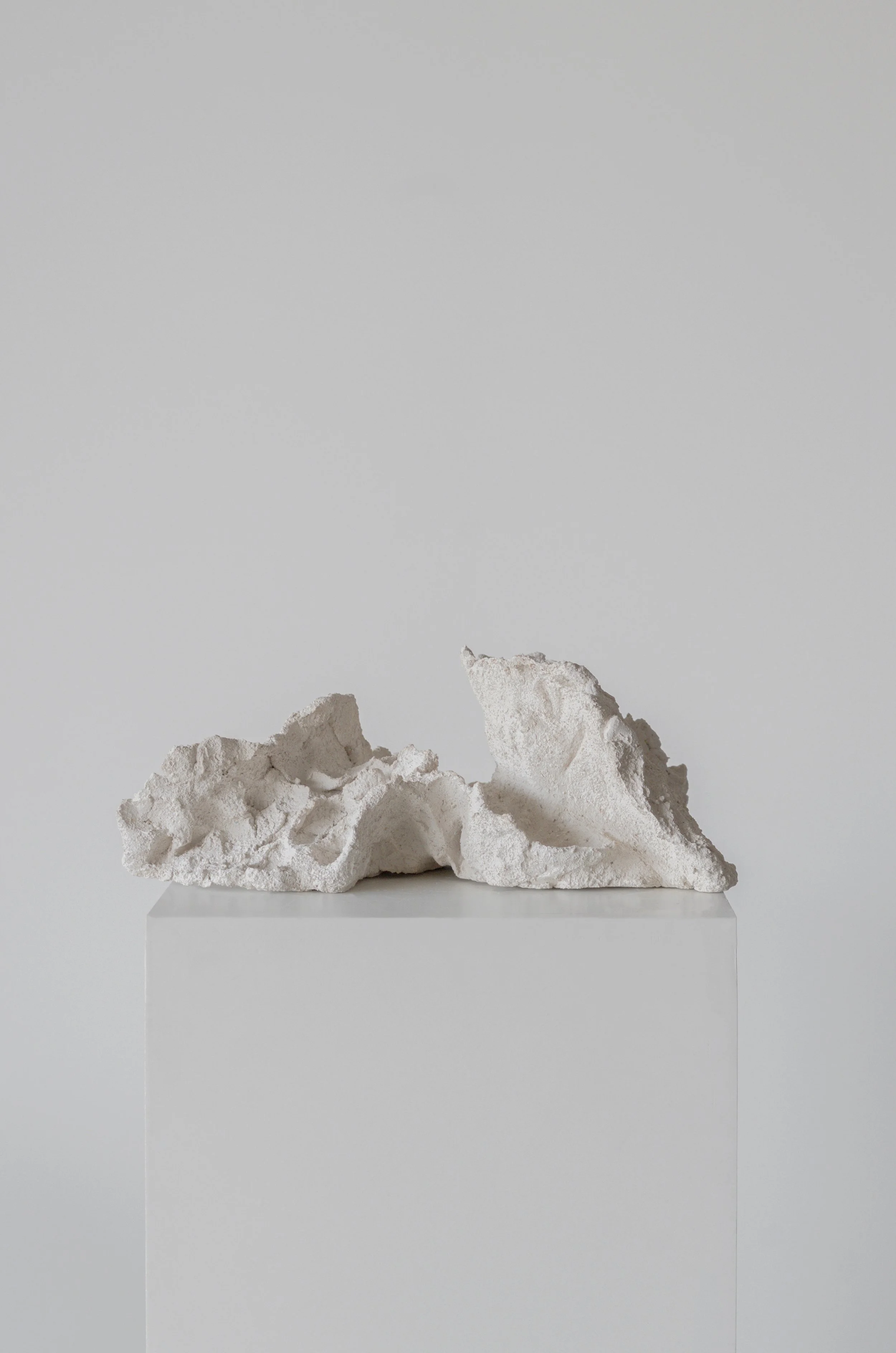
Aiassa approaches her materials with a kind of careful listening. She works mainly with chamotte clay, raw cotton, and natural pigments, letting water, gravity, and air participate in the final form. Her pieces appear to have come from another era; they may resemble parts of architecture, tool fragments, or items that were once a part of a bigger, now-lost whole. The memory of earth and stone is preserved via her paintings. For Aiassa, materials are not just technical supports; they are carriers of experience. Her work speaks about how identity is shaped by place, and how memory can live inside matter. Her role is not only to shape, but also to allow processes to happen. The imprint in her work is shared between her hand and the forces of the environment.
Renteria extends this attention to material in the field of textiles and symbolic objects. Using techniques such as low‑warp weaving and drawing on ancestral Mesoamerican knowledge, he combines textile and non‑textile elements to build works that feel like containers for memory and ritual. Natural dyes such as logwood and cochineal, together with coyuchi cotton, paper, hair, stones, and other elements, point to specific territories and histories. In his works, materials are never neutral; they carry the weight of trade, belief, and daily life. The pieces recall talismans, offerings, or protective cloths, suggesting that to make something is also to call something in. The ancestral techniques he uses are not simply quoted. They are engaged in the present to weave distance, memory, and continuity between his Mexican origin and his current European surroundings.
Together, the works of Morgunov, Aiassa, and Renteria open a conversation about what a trace is, how something can be both fragile and persistent, and how small gestures with materials can hold complex ideas about who we are. There is no single story linking their works, no shared iconography. What brings them together is a common understanding that making is a slow accumulation of layers and, at the same time, a gradual erosion. Time is not just a background condition in their practices; it is an active element that they welcome into the work.
The booth proposed by Sorondo Projects transforms into a space where impression is recognized as something deliberate and active rather than merely a residue. Each work appears like a kind of sediment: built layer by layer, holding inside it the record of contact, pressure, and change. There are no portraits here, no obvious symbols of identity. Yet, through textures, materials, and the evidence of making, a presence becomes very clear. It is quiet, but it does not disappear.
The gallery's exploration of how Latin American and other artists reimagine identity through their use of matter and technique is continued in this show. As in previous projects, the emphasis is on the marks we leave, the gestures we repeat, and the stories that are carried not by images, but by the materials themselves. In this booth, presence is something that is felt before it is understood. The imprint is not loud, but it stays.
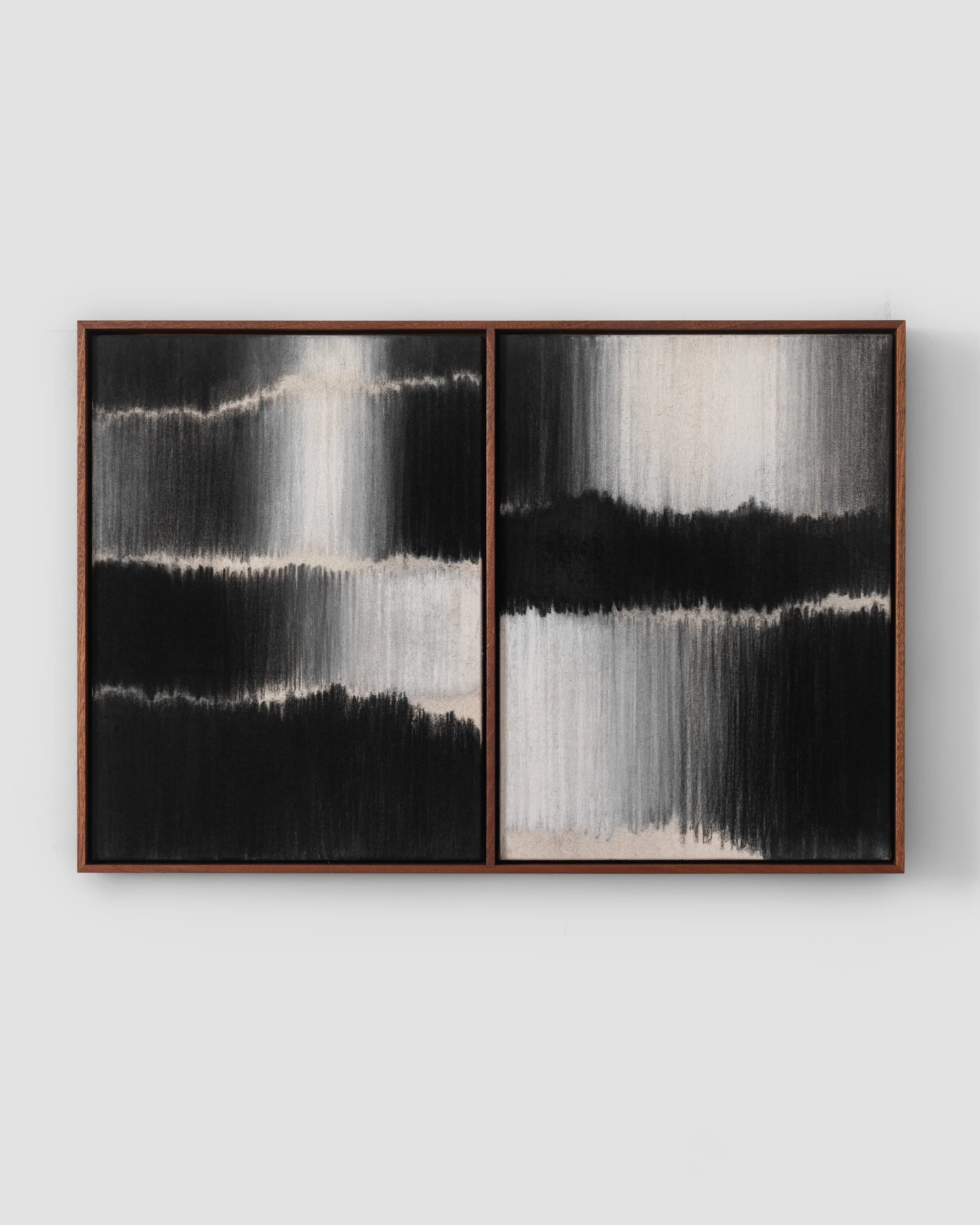
Nikolay Morgunov // 9.2/sa, 2025 // Cotton, charcoal, handcrafted frame, mixed media // 55 x 83 cm
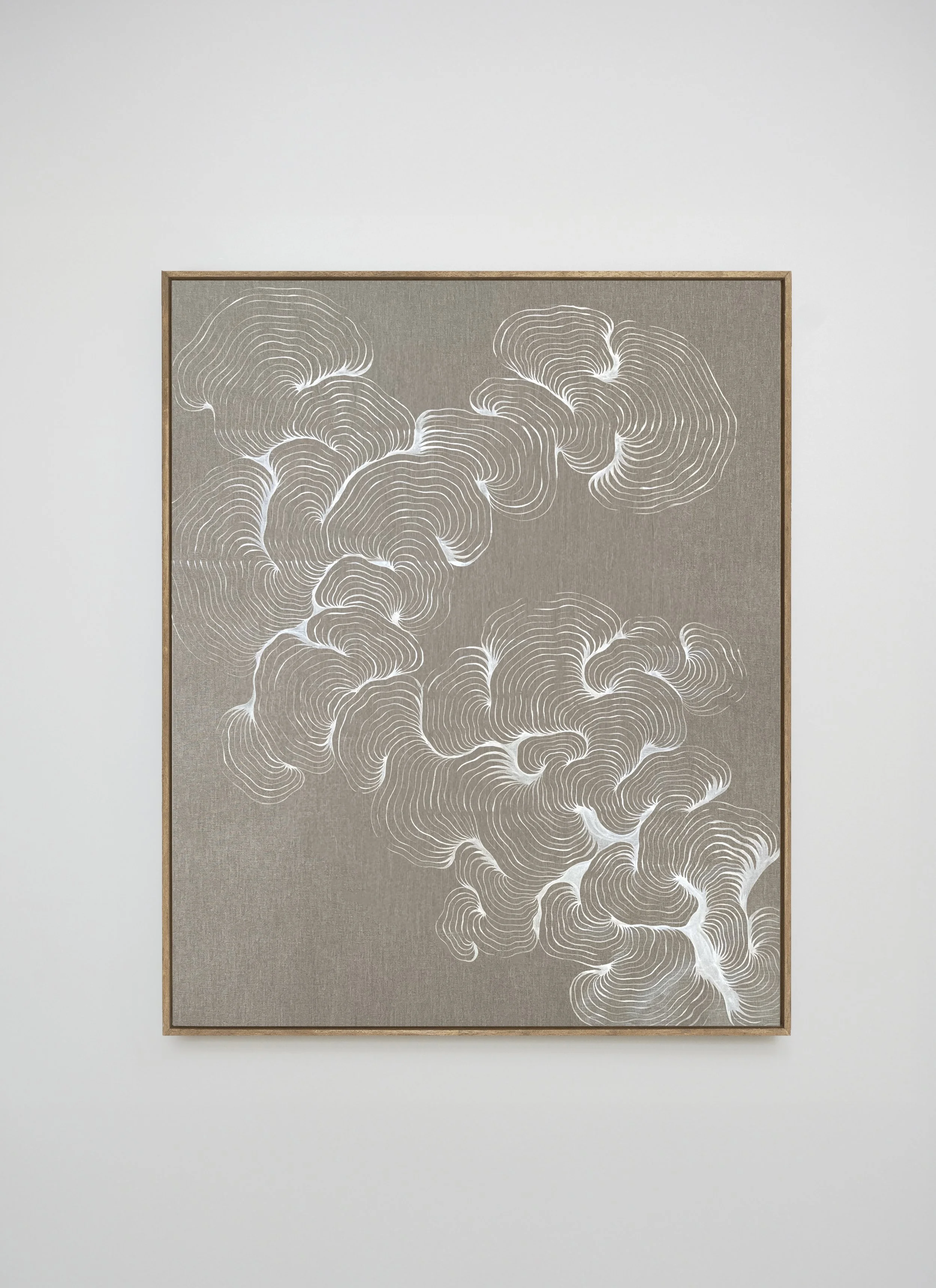
Antonela Aiassa // Untitled, 2025 // Indian Ink on Linen // 160 x 130 cm.
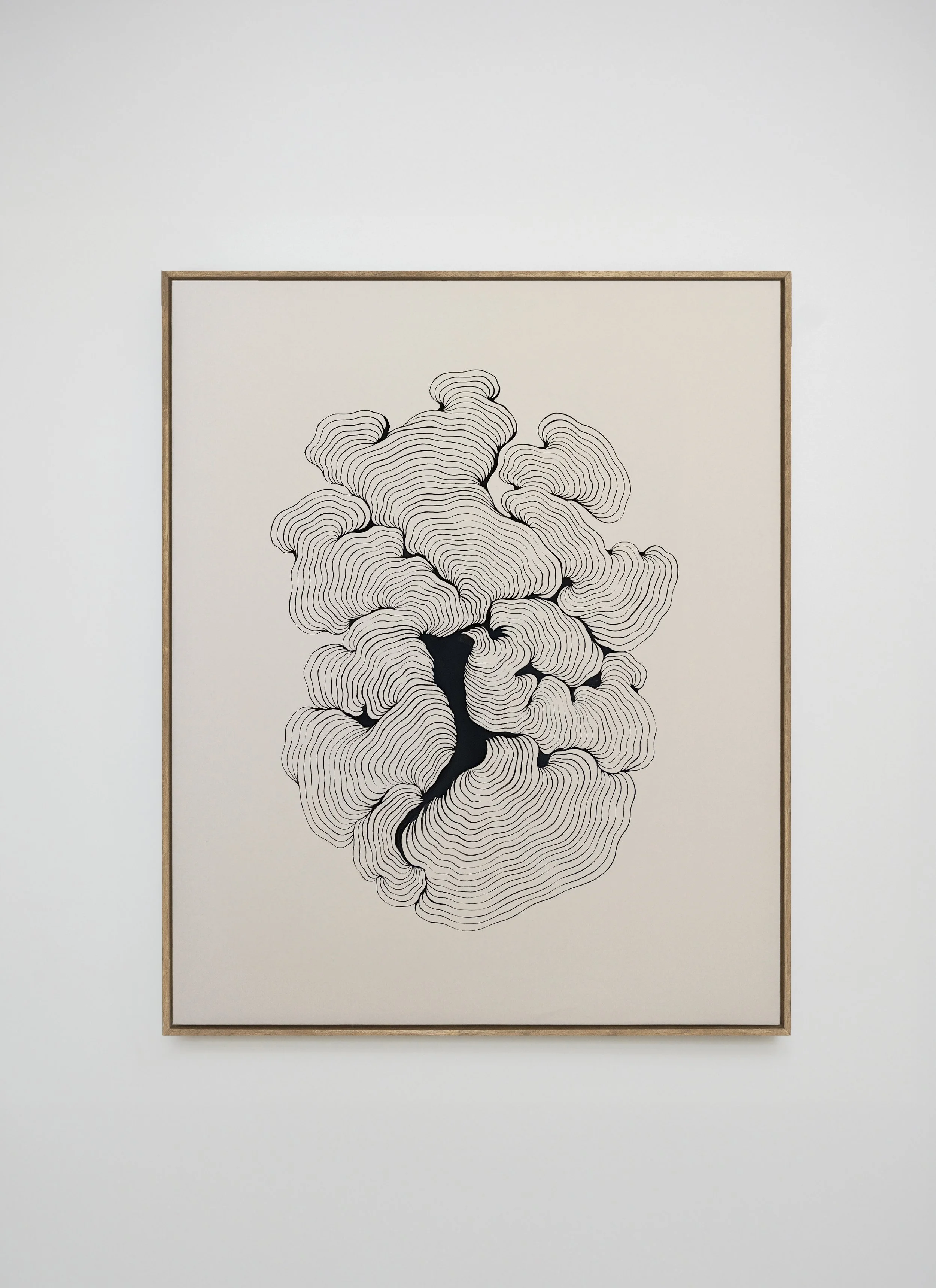
Antonela Aiassa // Untitled, 2024 // Indian Ink on Canvas // 160 x 130 cm.
Antonela Aiassa // N. 16, 2025 // Sculpture in clay with enamel finish // 35 x 15 cm.
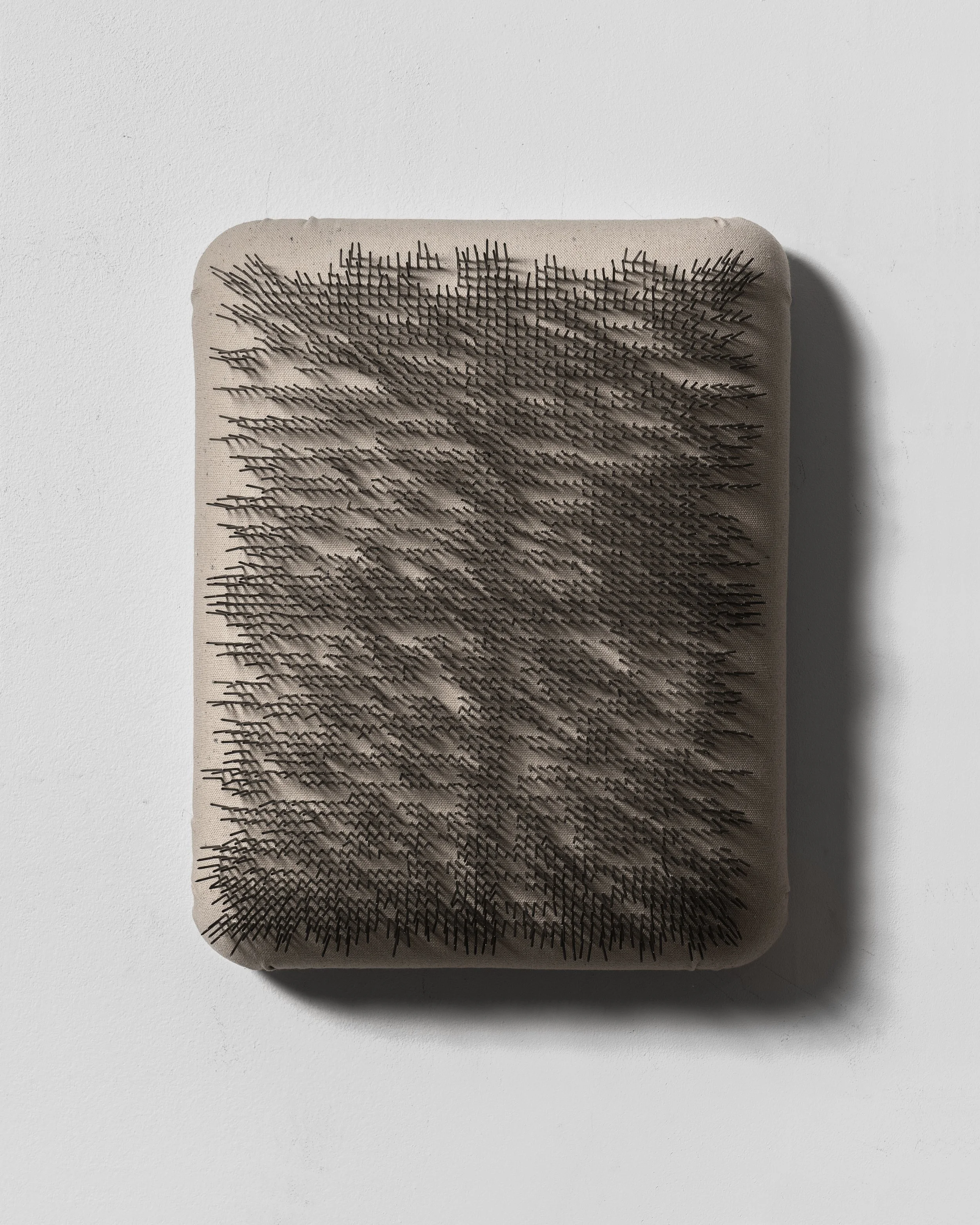
Nikolay Morgunov // n.67-m.c, 2025 // Canvas, foam, ink, nails, mixed media // 36 x 28 cm
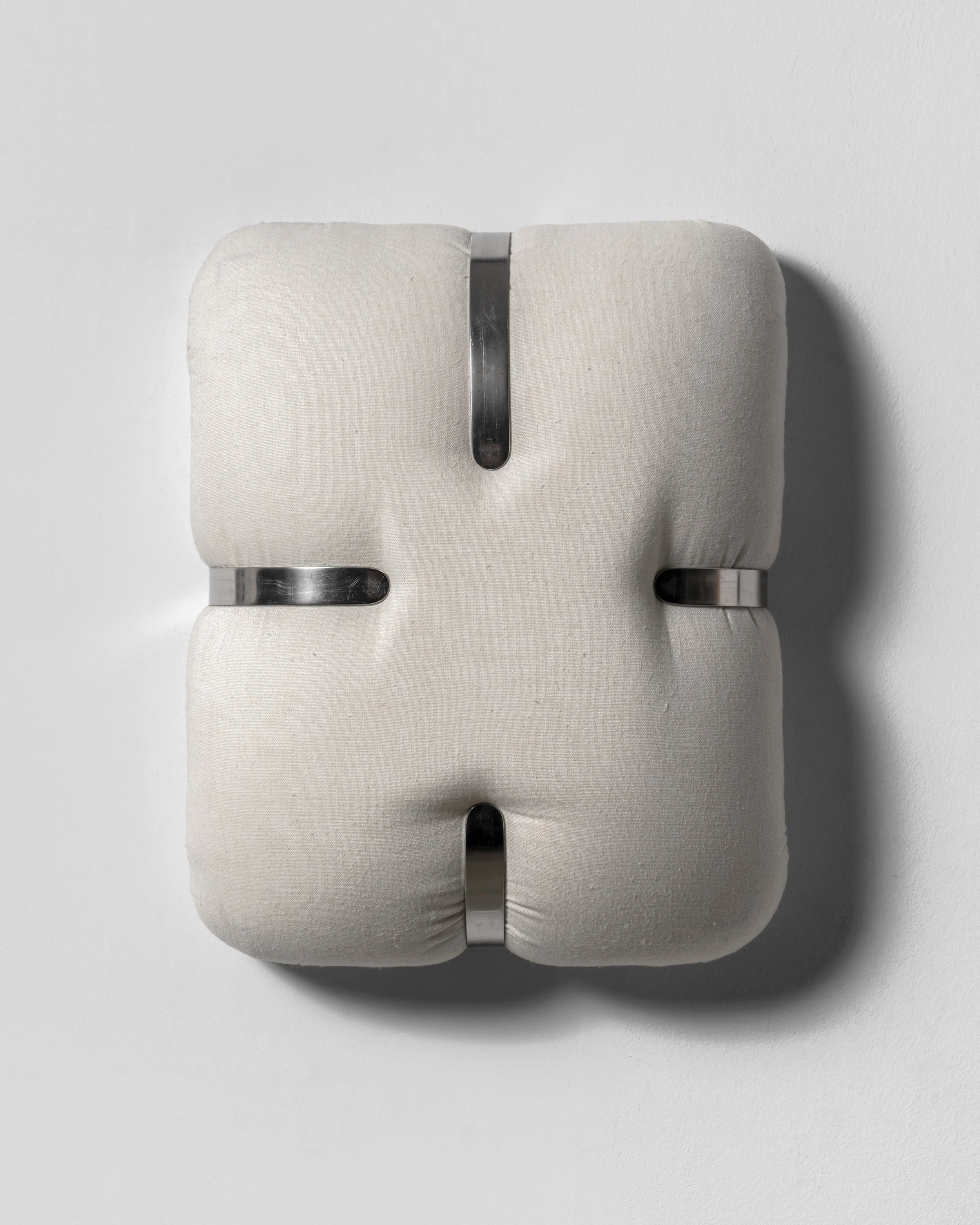
Nikolay Morgunov // e.0-g.b, 2025 // Linen, foam, handcrafted stainless steel brackets, mixed media // 36 x 28 cm
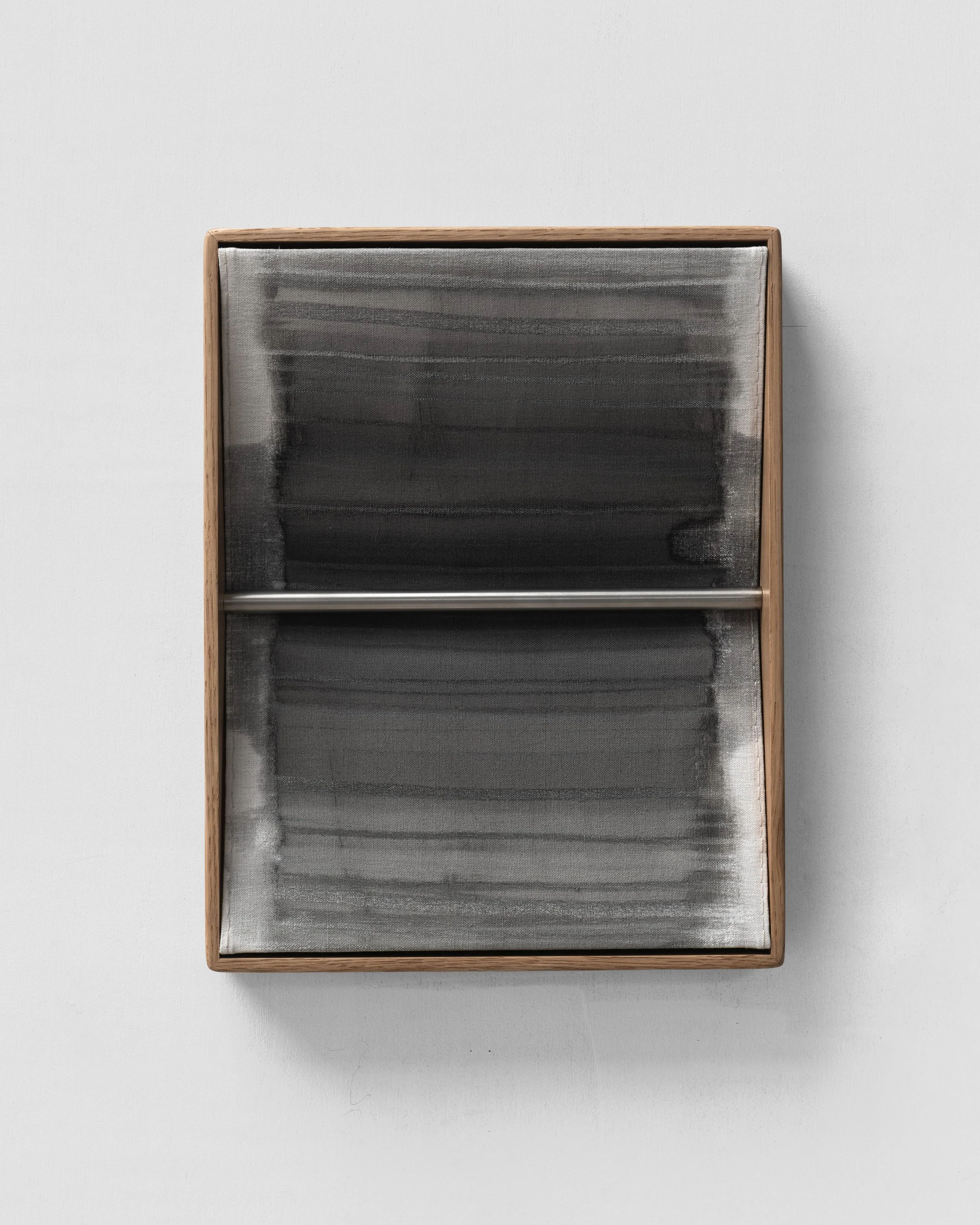
Nikolay Morgunov // t.0/78.r, 2025 // Linen, ink, charcoal, stainless steel, handcrafted oak frame, mixed media // 43x 33 cm
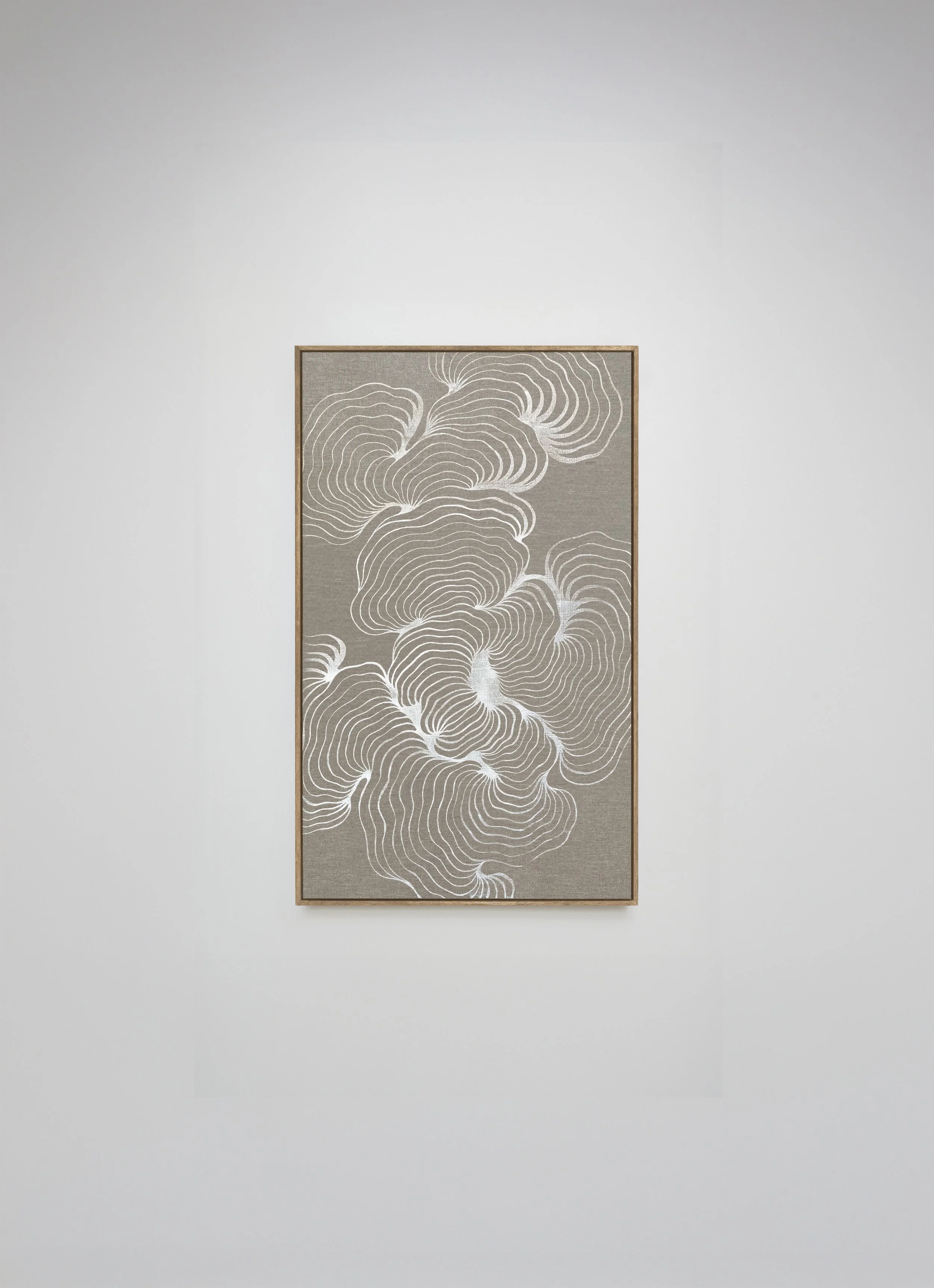
Antonela Aiassa // Untitled, 2025 // Indian Ink on Linen // 68 x 40 cm.
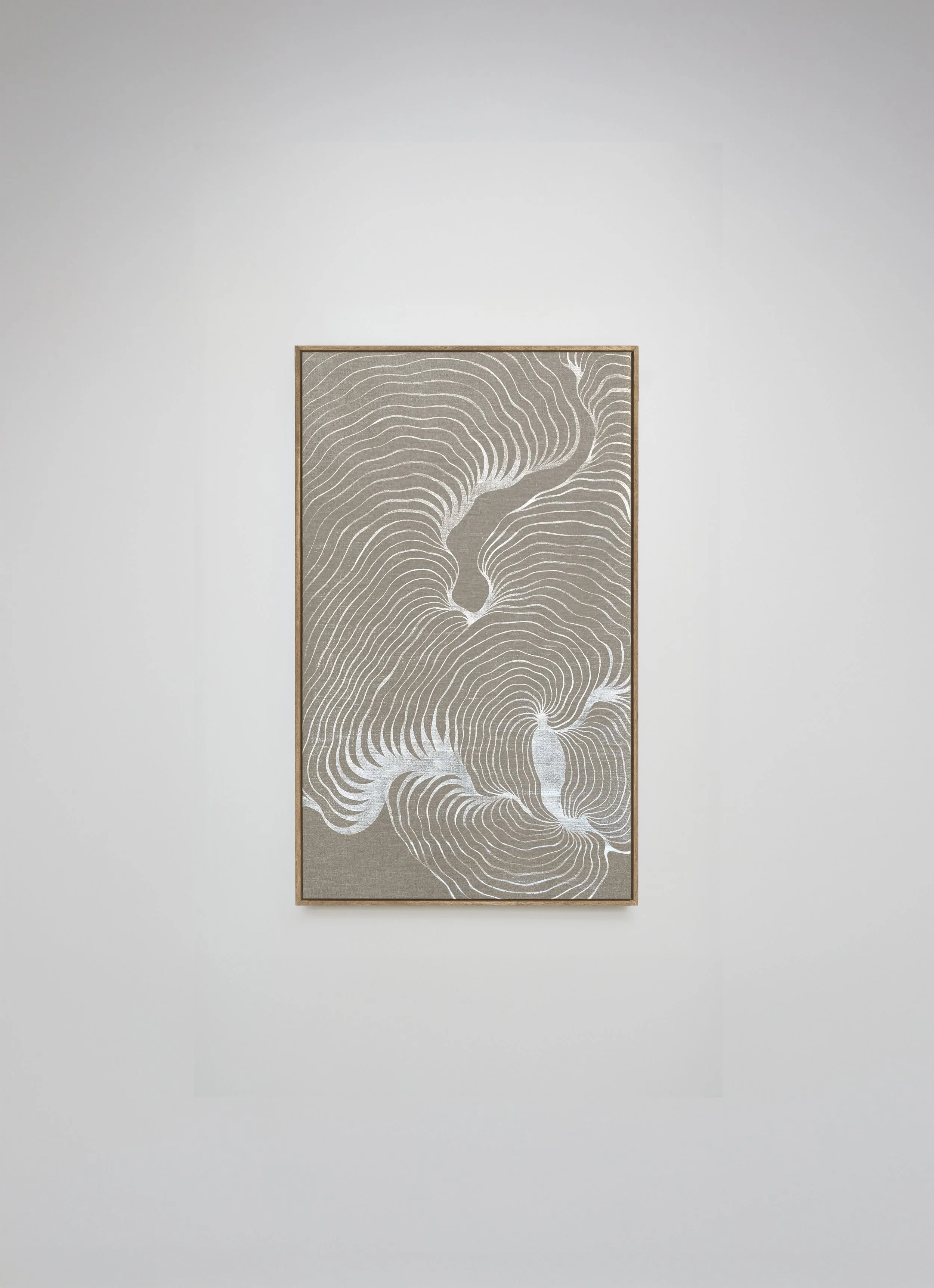
Antonela Aiassa // Untitled, 2025 // Indian Ink on Linen // 68 x 40 cm.
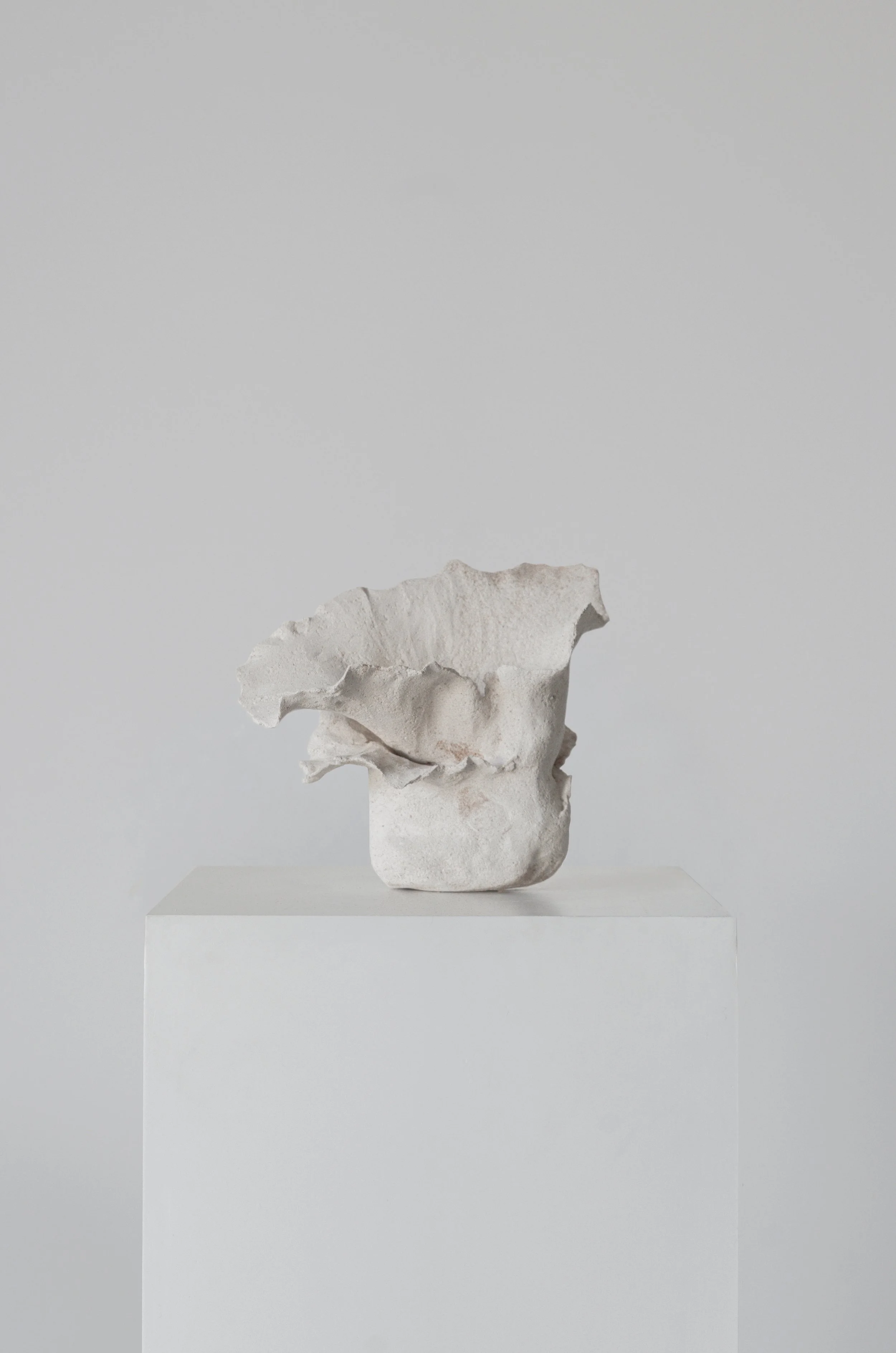
Antonela Aiassa // N. 15, 2025 // Sculpture in clay with enamel finish // 23 x 18 cm
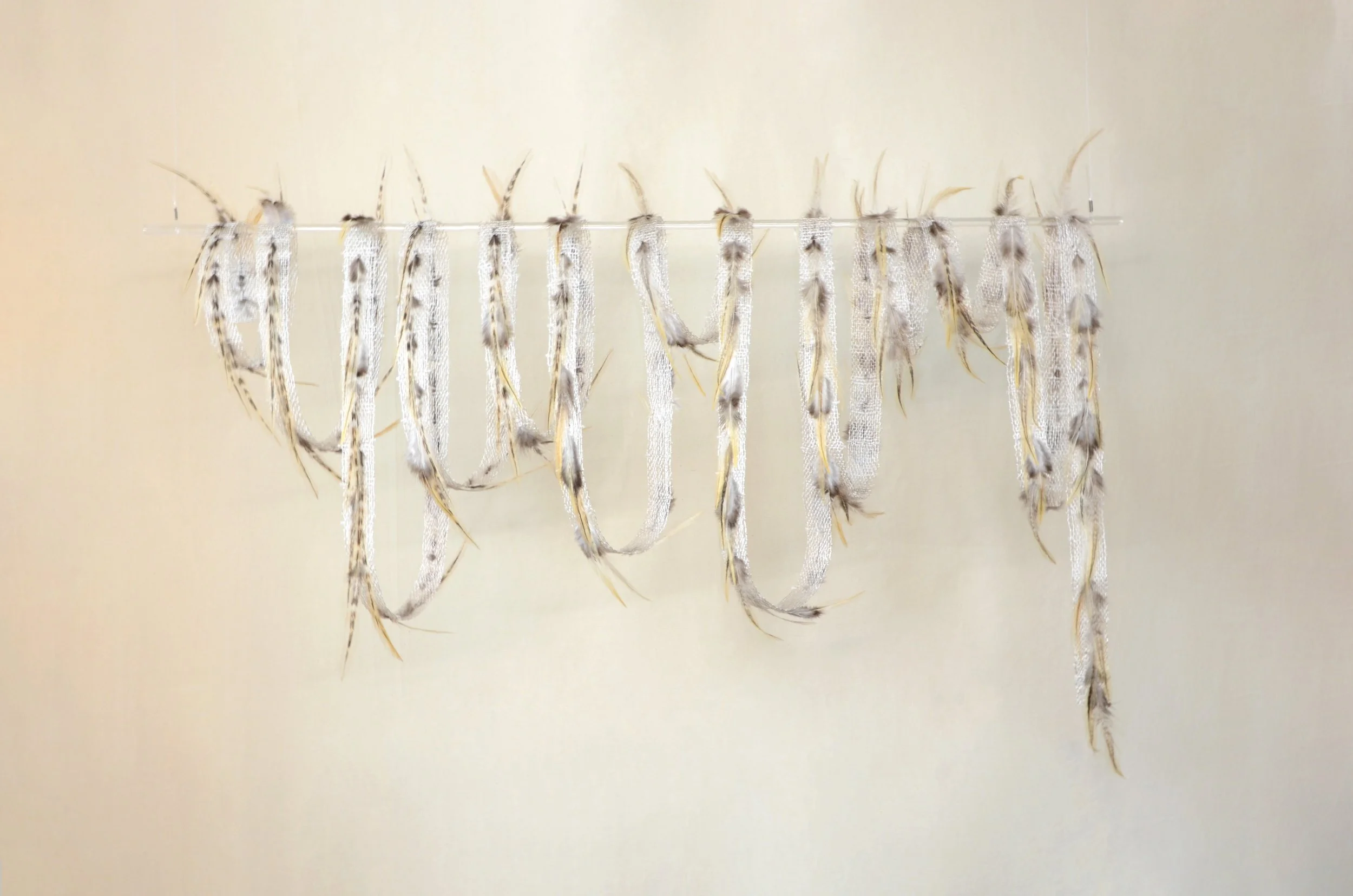
Luis Renteria // Emplumada, 2026 // Feathers, rayon, copper thread, and glass. Woven by hand on a pedal loom // 35 x 70 x 12 cm
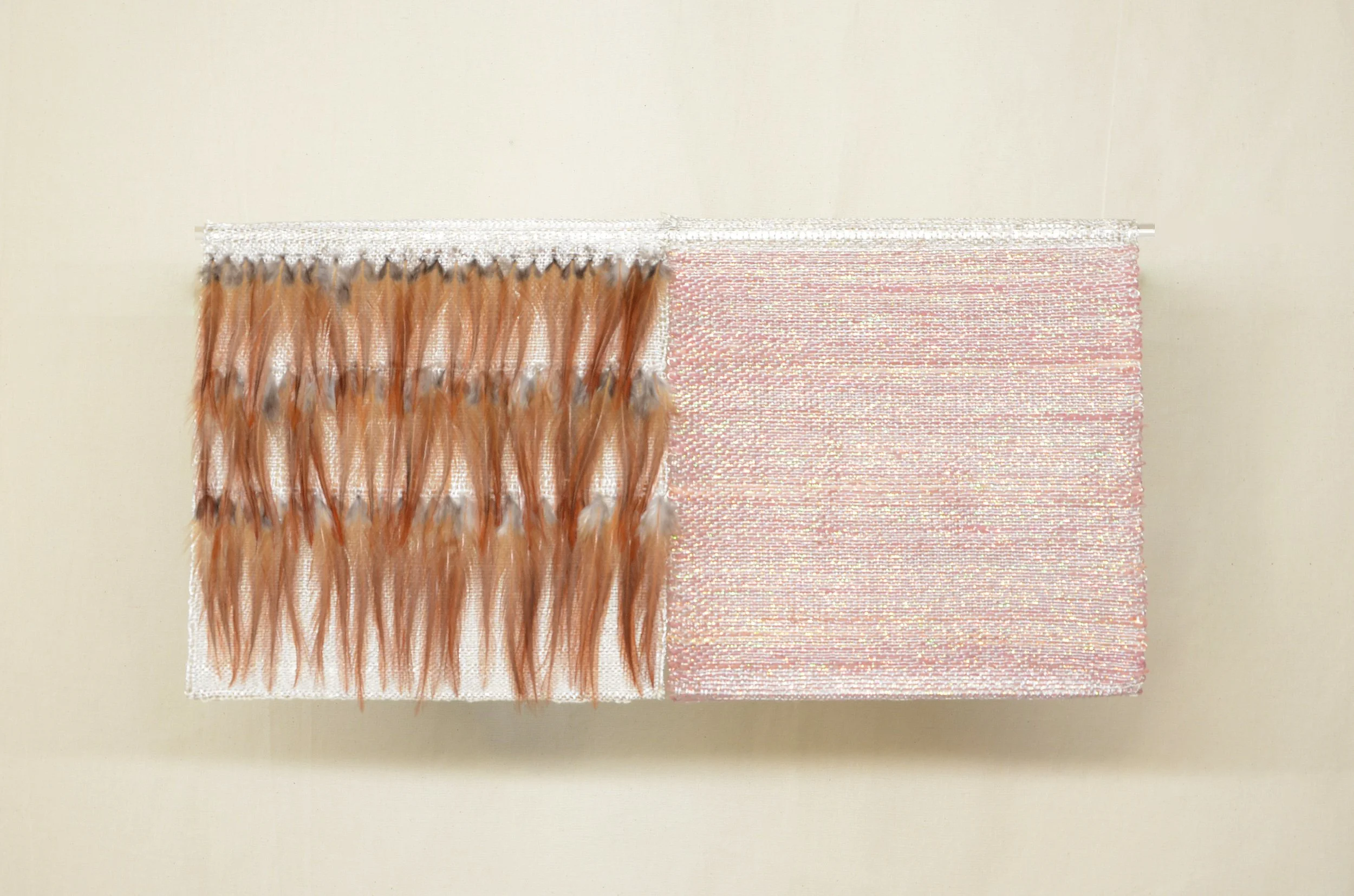
Luis Renteria // Mosaico I, 2026 // Feathers, rayon, polyester, copper thread, and raffia dyed with cochineal. Woven by hand on a pedal loom // 22 x 43 cm