
untitled miami:
the politics of appearance
emiliana henriquez, angyvir padilla, miranda makaroff
3-7 december 2025
The body is the first layer of our being that enters the world. It is what others encounter before our voice, before our story, before our essence is fully known. It is the container and the surface. It is the visible frontier between who we are and how we are perceived. The body holds our history: the things we love about ourselves, and the things we wish we could change or hide. It walks with us through life. It will accompany us always, just like our mind does, through every moment of becoming.
We live in a world increasingly ruled by the visual. In this landscape, what is seen tends to matter more than what is understood. What can be perceived externally often eclipses what is internal. In this system, the body becomes a message. And how we choose to present that message becomes a daily negotiation between truth and performance.
As a woman born and raised in Venezuela, this negotiation began early. In a culture where women’s bodies are often consumed through the male gaze, where beauty becomes currency, and presence becomes spectacle, I grew up understanding that how I looked would shape how I was treated. My body was not considered ideal, I lived for many years with morbid obesity. Because of that, I became hyper-aware of how I occupied space, of what parts of myself I should conceal and what parts I should highlight, just to be accepted, just to be treated with basic respect.
I turned to appearance not as vanity, but as survival. Ornaments became tools: ways to redirect the gaze, to craft an image I could live inside of with pride. Symbols of femininity, carefully chosen details, accessories, gestures, became shields and bridges at once. They were not superficial. They were strategies of communication. Tactics of selfhood.
This tension is not new. Throughout history, the visible has been coded. In the Baroque or Rococo periods, for instance, a textile’s color, the length of a skirt, the volume of a silhouette all spoke of class, status, desire, availability. A corseted waist was not only a sign of beauty, it implied that the woman wearing it did not need to labor. The body, shaped by fabric, was narrating something much larger than itself.
Today, we like to think we are freer. But are we? What is the story we are telling now, not only with our clothes, but with how we choose to be perceived? What emblems do we still rely on to declare value, identity, desirability, agency? And when we play with those emblems, are we subverting them or simply mastering them better?
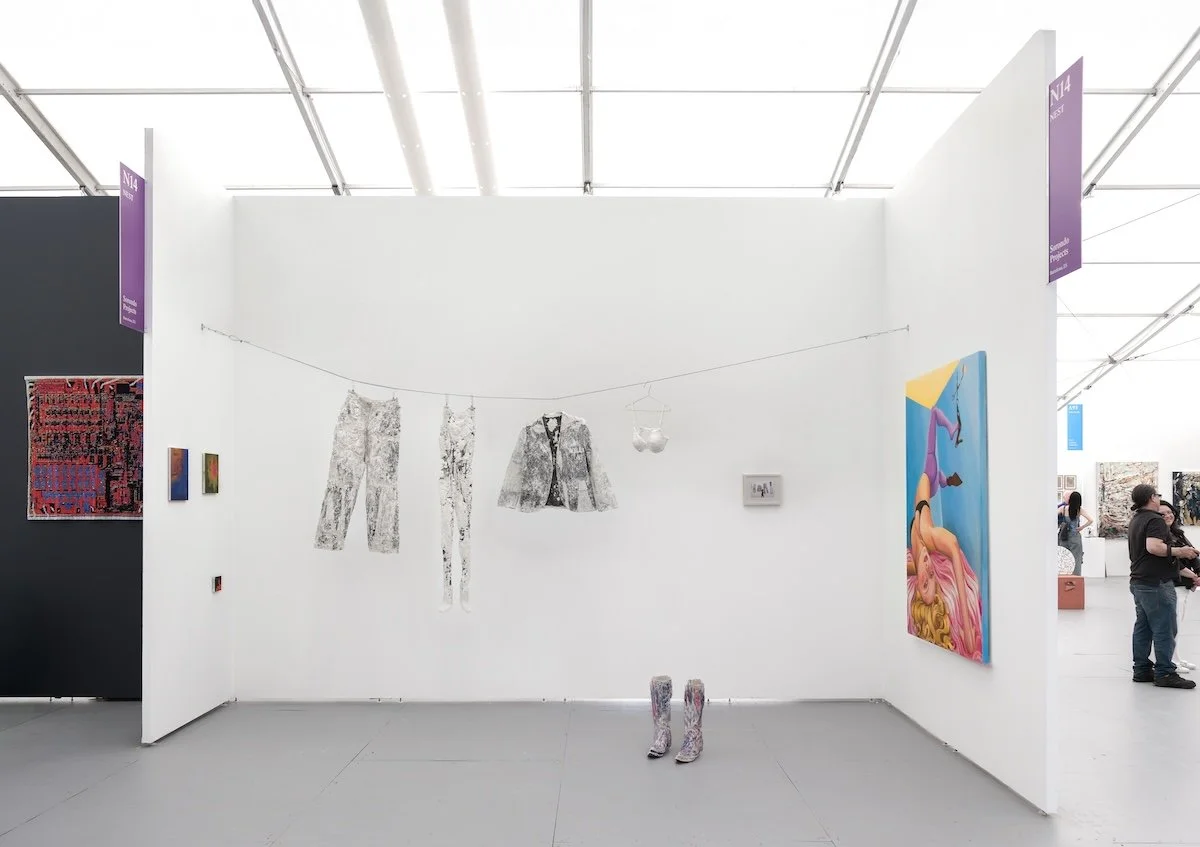
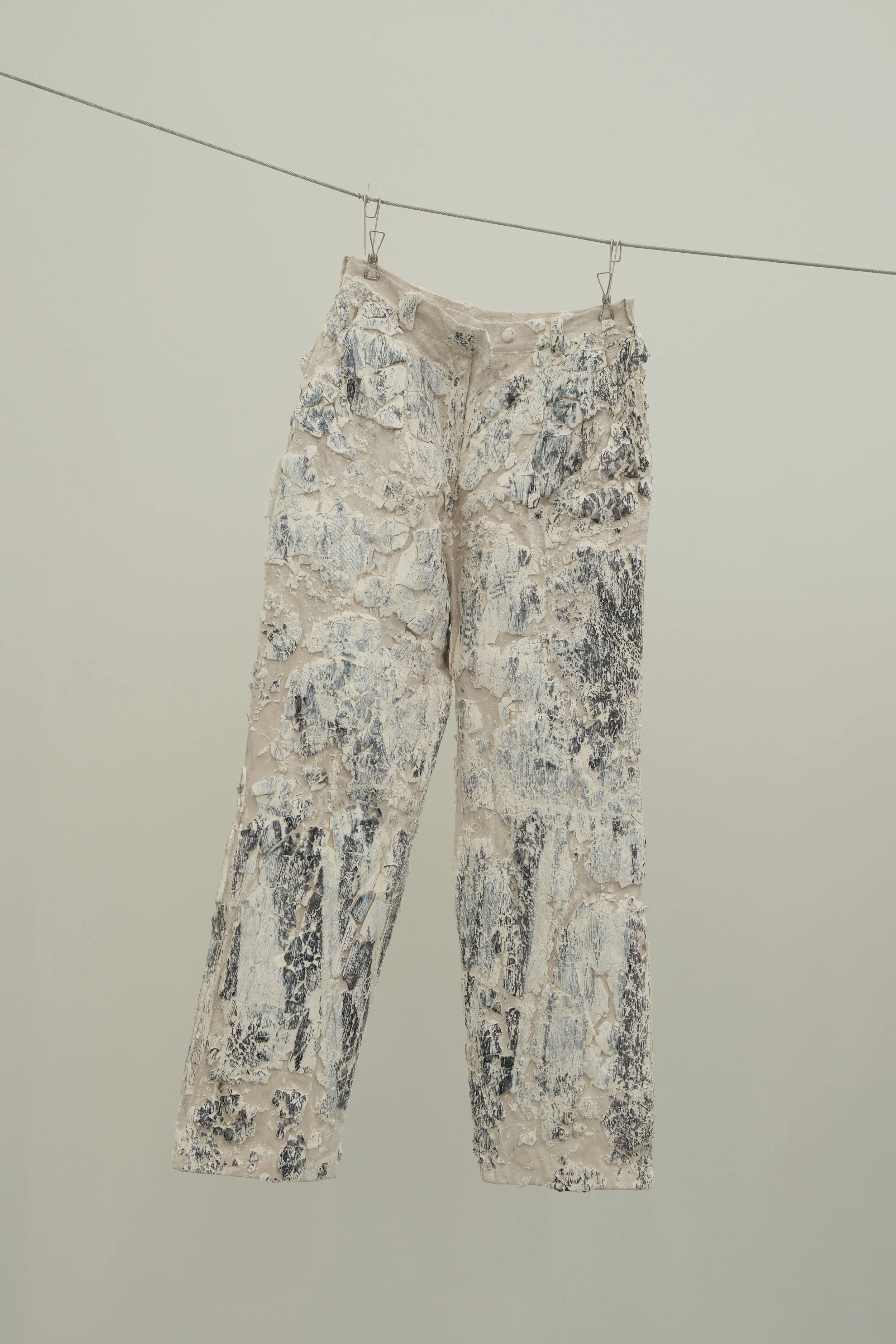
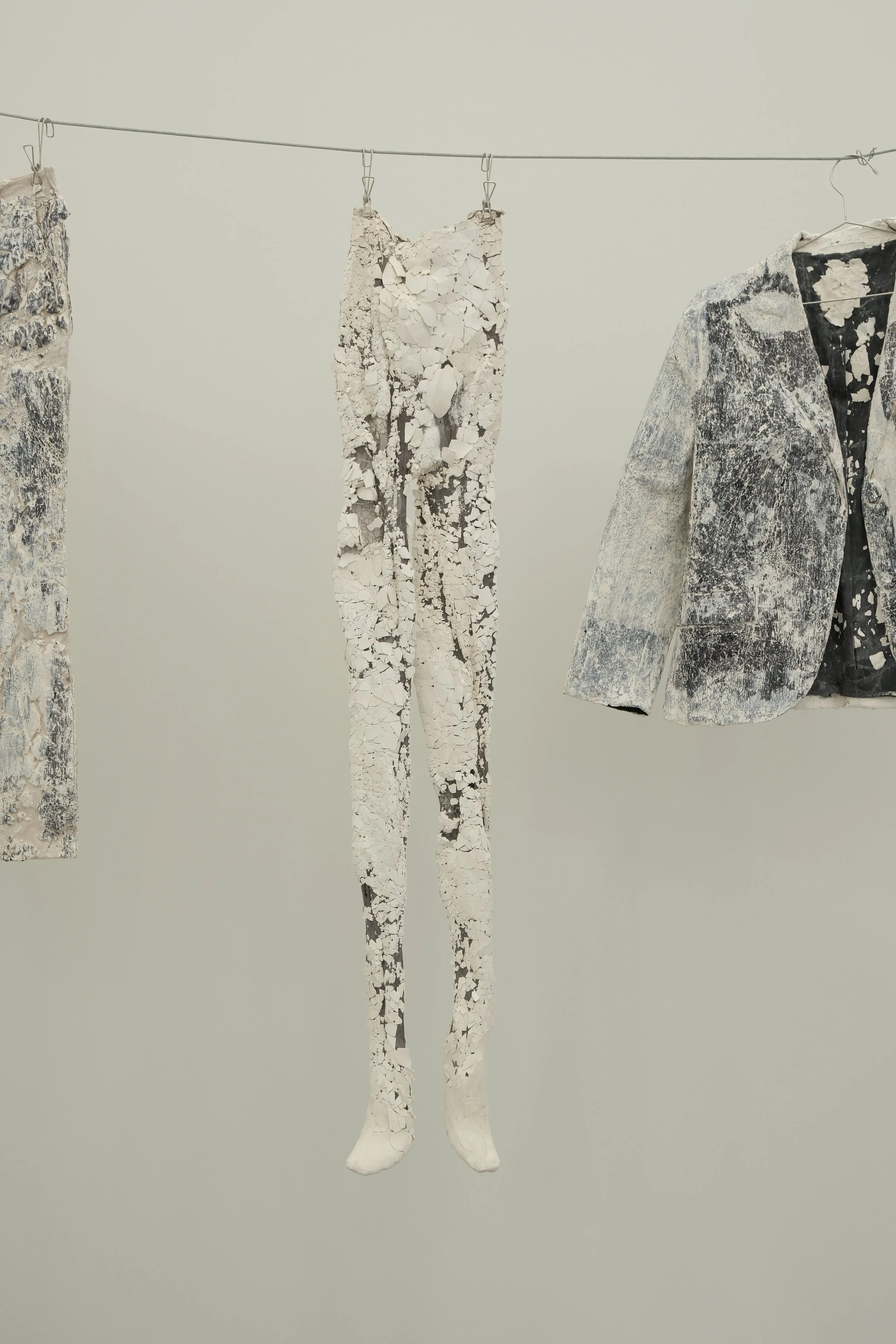
The artists in this booth open these questions. Angyvir Padilla, also Venezuelan, grew up surrounded by women who understood appearance as power. Her mother ran a modest clothing business from home, selling affordable yet professional-looking garments to women who needed to look successful, even when their lives were challenging. Clothes, in that context, were not about luxury but about dignity. They were tools of access. Her performative piece, Virgy’s Boutique, is a tribute to that world, where being seen in a certain way could mean survival, opportunity, pride.
In contrast but in dialogue, Miranda Makaroff, from Spain, constructs a universe where appearance is theatrical, ecstatic, intentional. Her mother, a fashion designer, was always surrounded by fabric, by color, by creation. Miranda’s work embraces the game of seduction, of artifice, of play. But again, the question remains: where does play become power?
Emiliana Henriquez, born in El Salvador and raised in Los Angeles, adds a spiritual and cross-cultural dimension to this reflection. Her paintings weave together myth, devotion, and identity, exploring how appearance is shaped not only by society but also by faith and heritage. Through symbolic color, layered compositions, and references to textile and ritual, Emiliana’s work speaks of belonging and transcendence. Her recent series, Warm Blue Velvet, explored the visual languages shared across Abrahamic religions, transforming fabric into a metaphor for connection and reverence. In her practice, appearance becomes a site where belief and selfhood meet, where the visible world gestures toward the sacred and the unseen.
All three artists ask, in different voices, what it means to make the private visible, and to invite others into that visibility. Their works remind us that perception is never innocent. To show oneself is not a neutral act. It is political, emotional, sometimes painful, sometimes joyful. It is about negotiating intimacy with exposure. Selfhood with spectacle.
In curating this art fair booth, I return to the vulnerability and strength of those early feelings, of wanting to disappear and to be seen at the same time. I return to the complexity of the body, not just as a form, but as a field where meaning is projected, and where resistance can also be found.
To adorn, to reveal, to hide, to play, these are not just aesthetic decisions. They are existential ones. And in a world, and a specific city such as Miami, where the visible dominates, perhaps one of the most radical acts is to take control of how and why we are seen.
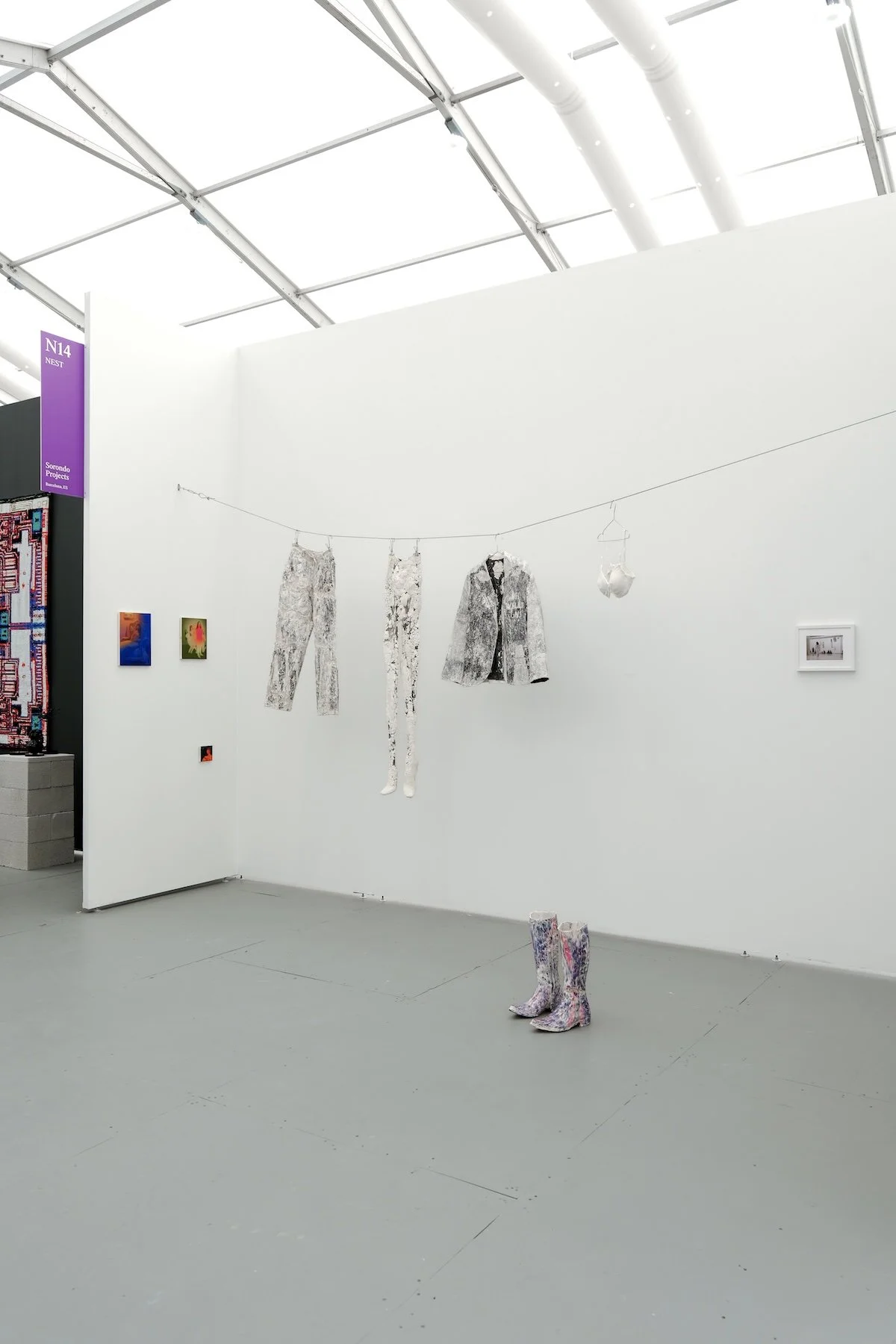
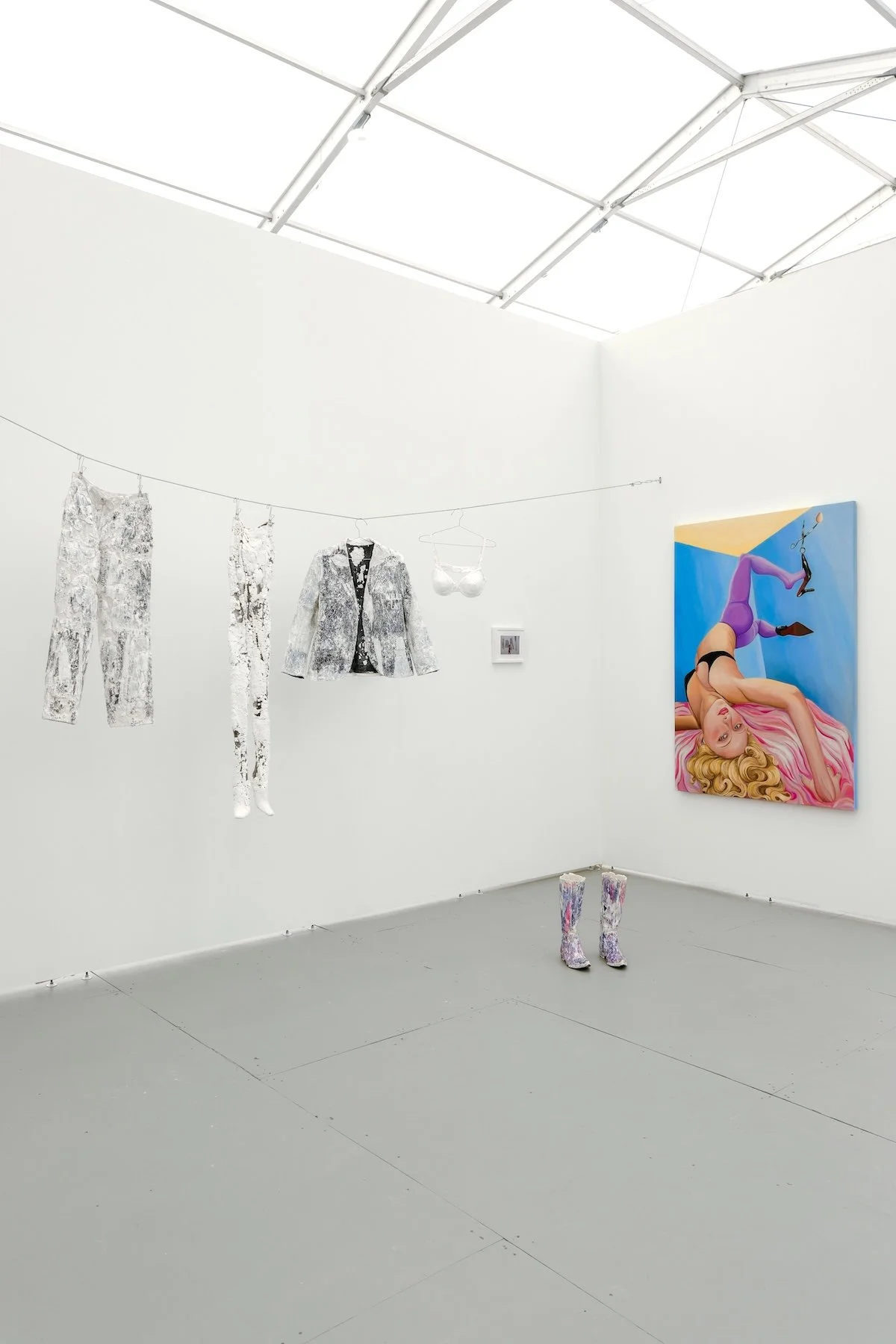
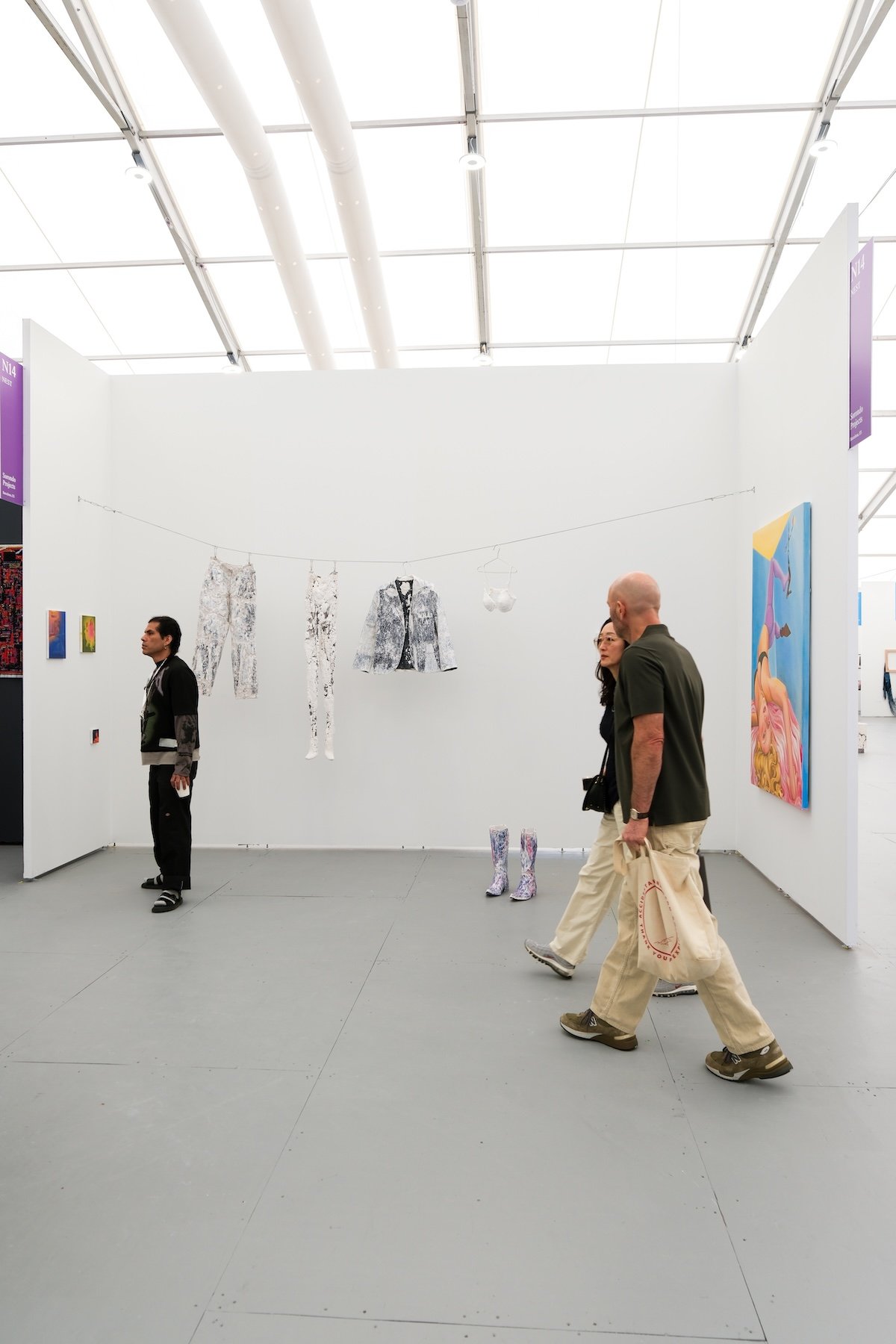
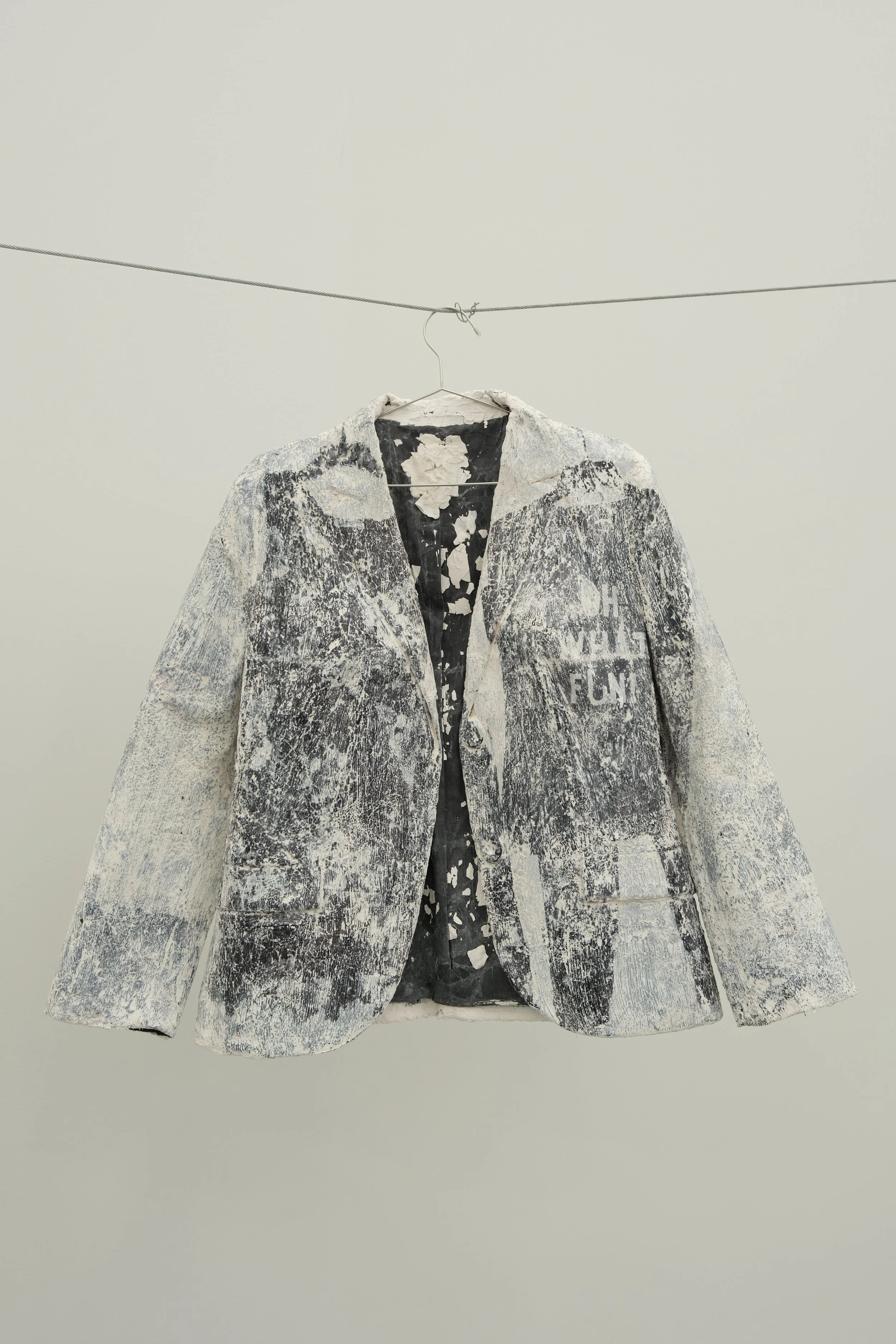

Virgy's Boutique, 2023 // Angyvir Padilla

Transcending thrones, 2025 // Emiliana Henriquez // Oil on linen // 34 x 25 cm
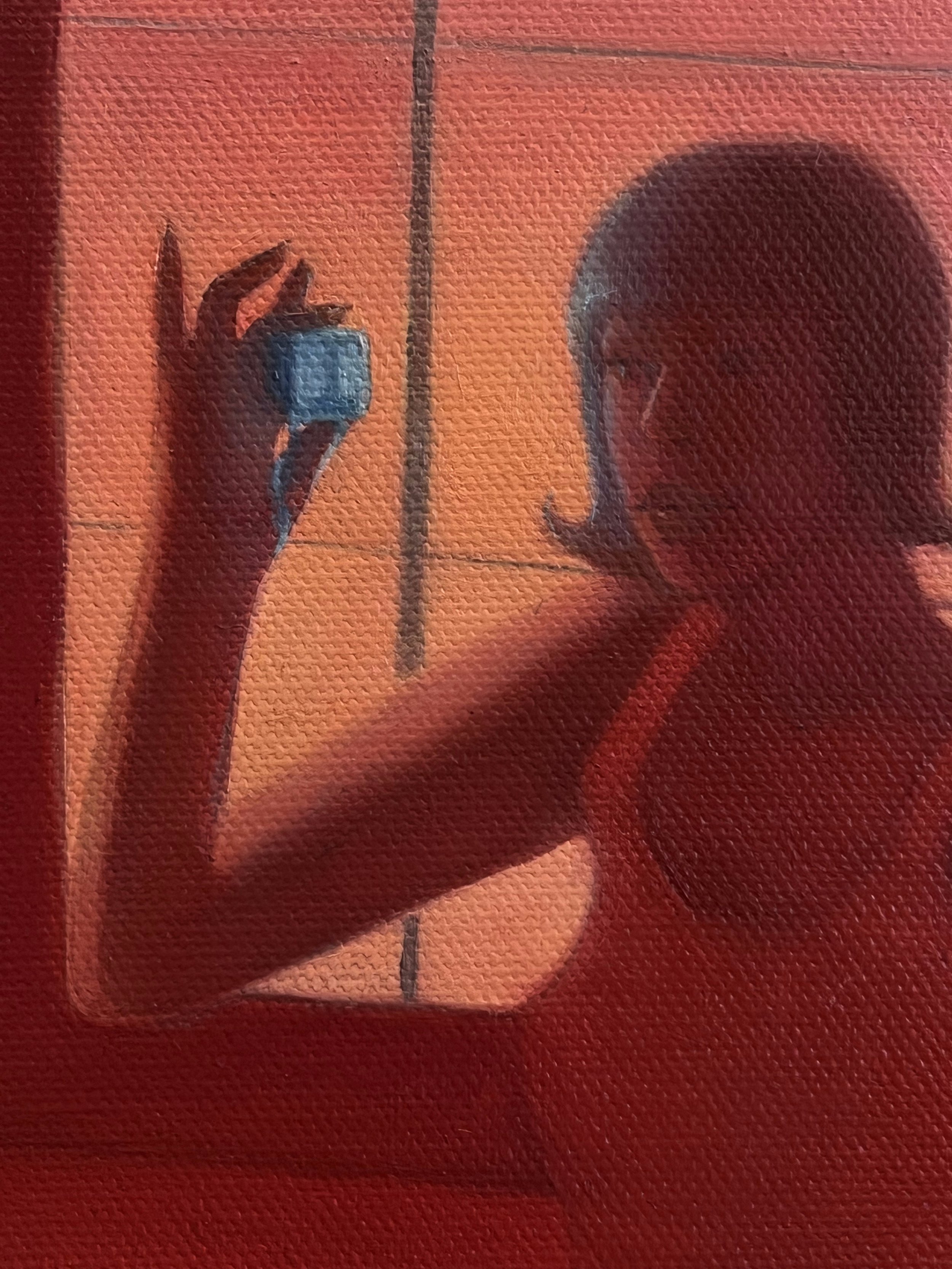
Who's gonna save us now, 2025 // Emiliana Henriquez // Oil on Canvas // 13 x 13 cm
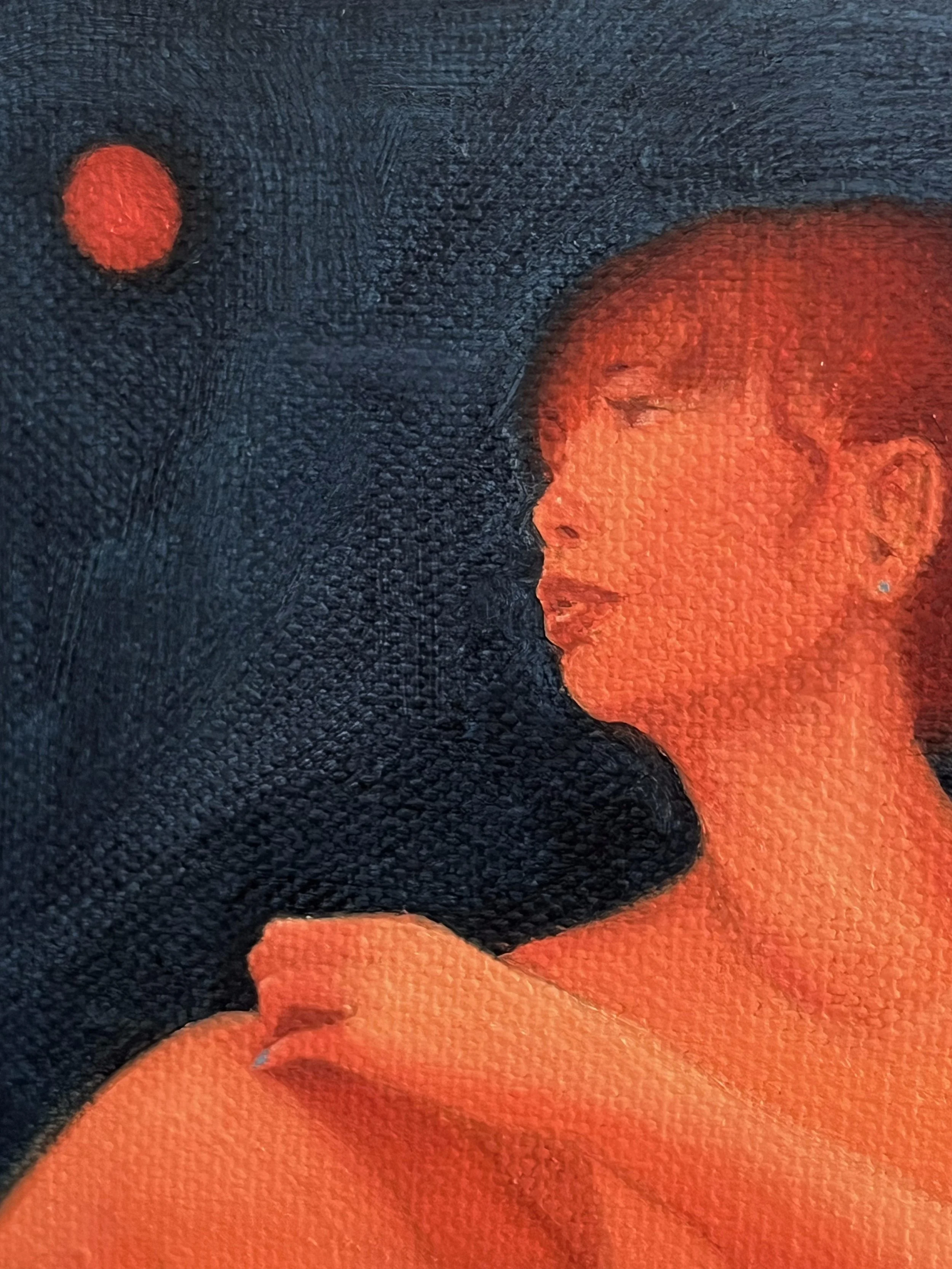
Individual & the whole, 2025 // Emiliana Henriquez // Oil on Canvas // 11 x 11 cm
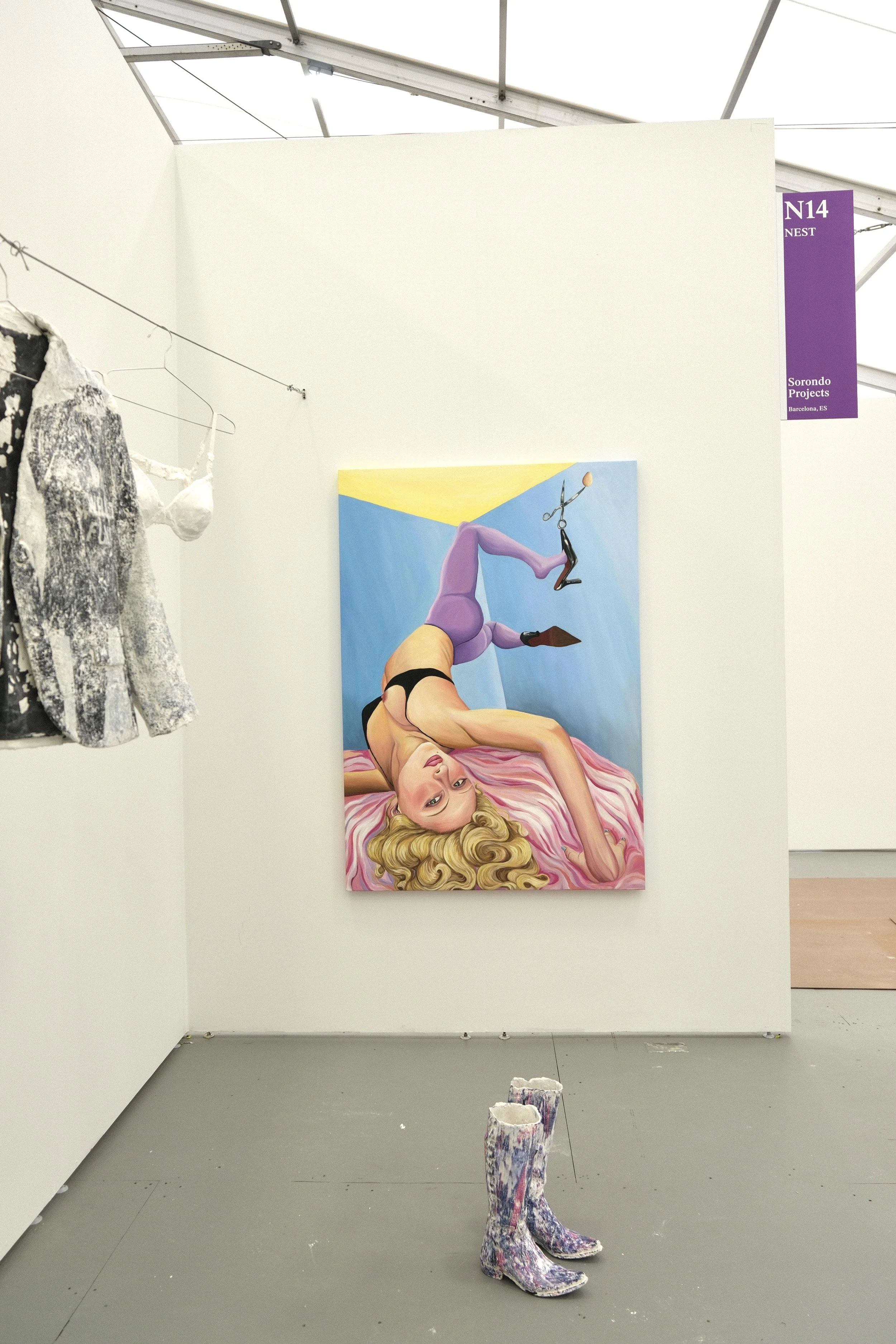
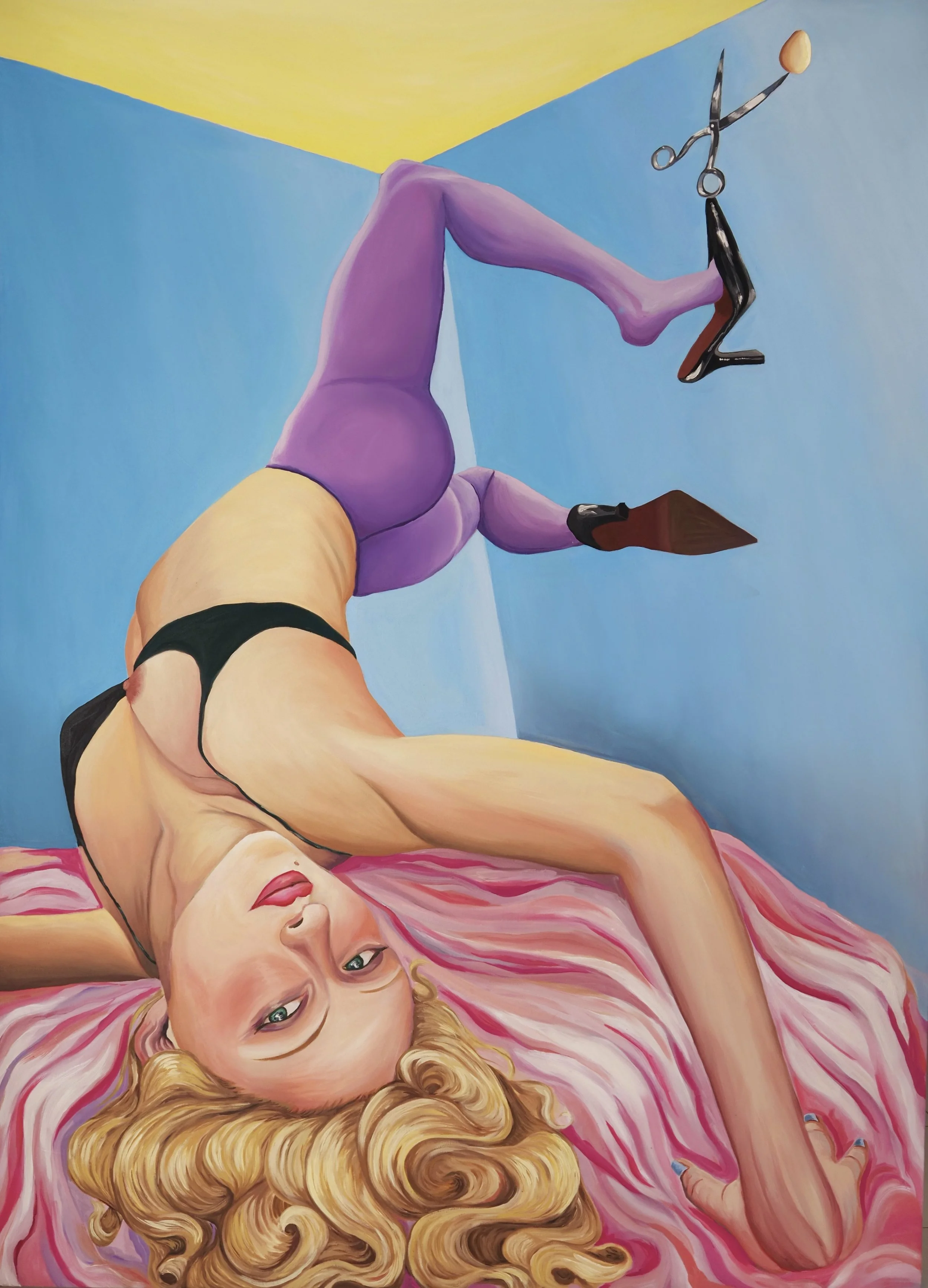
Autoretrato maternidad, 2025 // Miranda Makaroff //Oil on Canvas // 170 x 120 cm
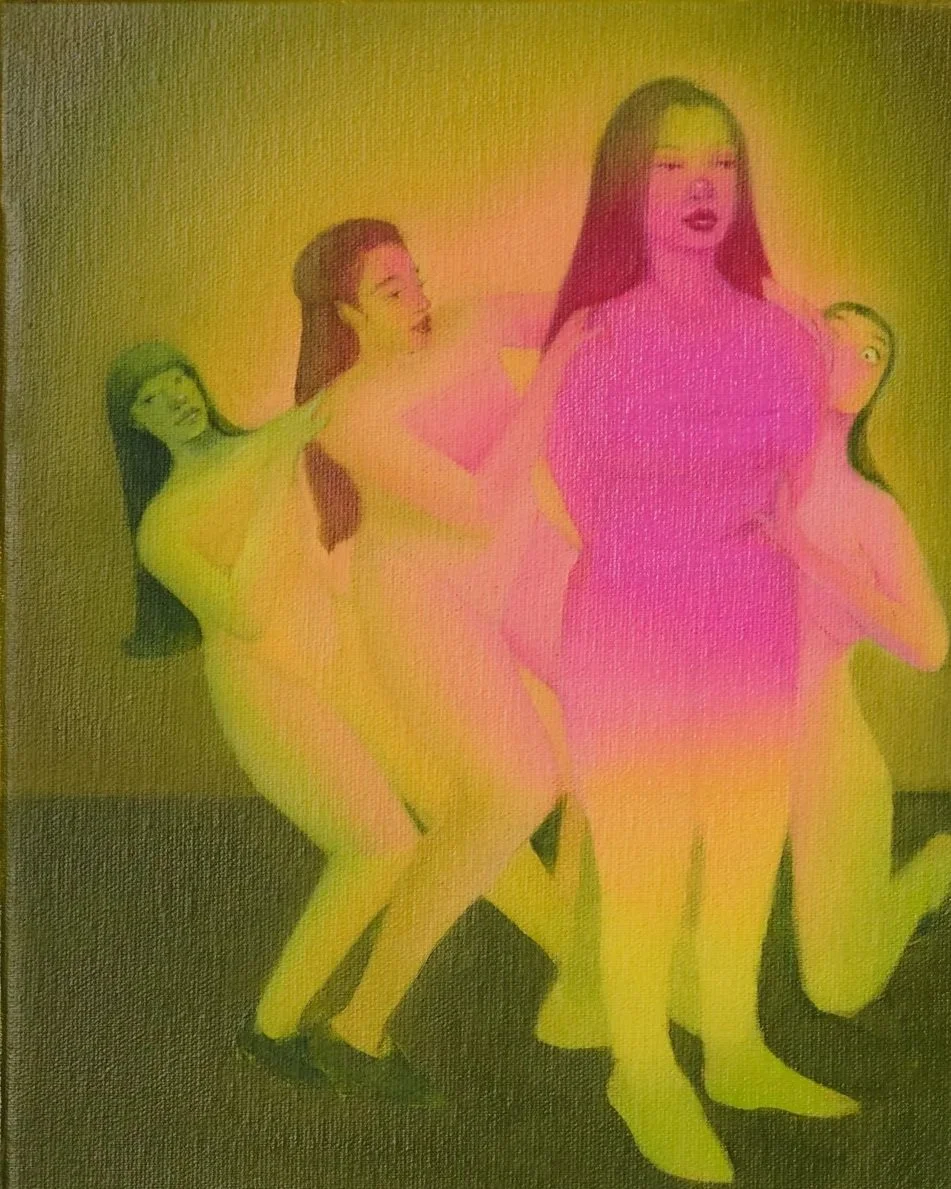
Frenemies, 2025 // Emiliana Henriquez // Oil on Canvas // 27 x 23 cm